A Career Opportunity for Real Estate Professionals
If you’re a real estate professional exploring business broker jobs or simply looking for a different career path, business brokerage might be the opportunity you’ve been looking for. Most real estate agents are familiar with selling homes, land, investment property, or commercial real estate. Business brokerage is different. Instead of simply selling real estate, a business broker helps a business owner to sell an operating business and retire. RETIRE. Think about that word for a minute. Most of the time a broker will be working with a seller that has spent many years building the business. To a business owner, their business is more than a commodity. The business is really part of their life.
For the right real estate professional, business brokerage can offer an opportunity to work on larger and more complex transactions, develop long-term relationships with business owners, and maybe build expertise in a specific industry.
What Does a Business Broker Do?
A business broker serves as an intermediary between the owner of a privately held business and prospective buyers.
The job can include determining an appropriate asking price, preparing the business for market, putting marketing materials together, identifying and qualifying prospective buyers, protecting the seller’s confidentiality, coordinating negotiations, assisting with financing issues, and helping manage the transaction through closing. Almost always, commercial real estate will be involved in some way. If the business owner owns the property, then the transaction will probably include the sale of both the business and the property. If the business owner leases the property, then the transaction will include transferring the lease or negotiating a new lease.
This combination makes business brokerage particularly interesting for real estate professionals who enjoy working with business owners and analyzing transactions rather than simply marketing property.
Do You Need a Real Estate License to Become a Business Broker?
It depends on the state. Some states require a real estate license to broker the sale of an existing business. Many states don’t. Some states are in between and require a permit or registration as opposed to an actual license. So make sure to check out the requirements in the state where you will be setting up shop. In the end though, no matter what, real estate is likely to be involved in a business sale in some form, so it’s best to have a real estate license. The good news is that if you’re already licensed, the transition into business brokerage can be a natural one. Many of the fundamental skills are transferable: prospecting, developing client relationships, negotiating, understanding contracts, managing transactions, and bringing buyers and sellers together.
Do You Need Previous Business Brokerage Experience?
Not necessarily. Business brokerage is a hard gig and has a substantial learning curve, but many successful business brokers come from real estate, finance, banking, business ownership, sales, accounting, and other professional backgrounds.
What matters is the willingness to learn how businesses are valued, how financial statements and tax returns are analyzed, how buyers finance acquisitions, how confidentiality is maintained, and how a business transaction progresses from listing through closing.
An experienced real estate professional already understands something else that is difficult to teach: how to find clients and earn their trust.
How Do Business Brokers Get Paid?
Business brokers are generally compensated through commissions paid when a transaction successfully closes. Because privately held businesses can represent substantial transactions, particularly when commercial real estate is included, an individual transaction can produce a significant commission.
That doesn’t mean business brokerage is easy money. Listings can take months to develop. And transactions can be complicated. Buyers must frequently obtain financing. Financial records have to be analyzed. Deals can fall apart. Business brokerage rewards professionals who are comfortable with longer sales cycles and who are willing to develop expertise rather than simply chase transactions.
Is Business Brokerage the Same as Commercial Real Estate?
No, although there can be considerable overlap. A commercial real estate broker primarily sells or leases real property. A business broker is concerned with the operating company itself: its revenue, earnings, employees, customers, equipment, goodwill, competitive position and ultimately its value to a buyer.
In many cases though, the two come together. An owner may sell both the business and the real estate from which it operates. That creates an opportunity for a professional who understands both sides of the transaction.
The Advantage of Specializing
Business brokerage covers an enormous range of businesses. Restaurants, manufacturers, contractors, medical practices, automotive businesses, distribution companies and hundreds of other types of businesses are bought and sold every year.
A broker can attempt to sell all of them. But another approach is to specialize. Specialization allows a broker to learn the economics of a particular industry, understand what buyers are looking for, recognize the factors that create value, develop relationships within the industry and build a reputation among business owners. That is the approach we have taken at RPM Shop Sales.
You Want a Niche? We Have One
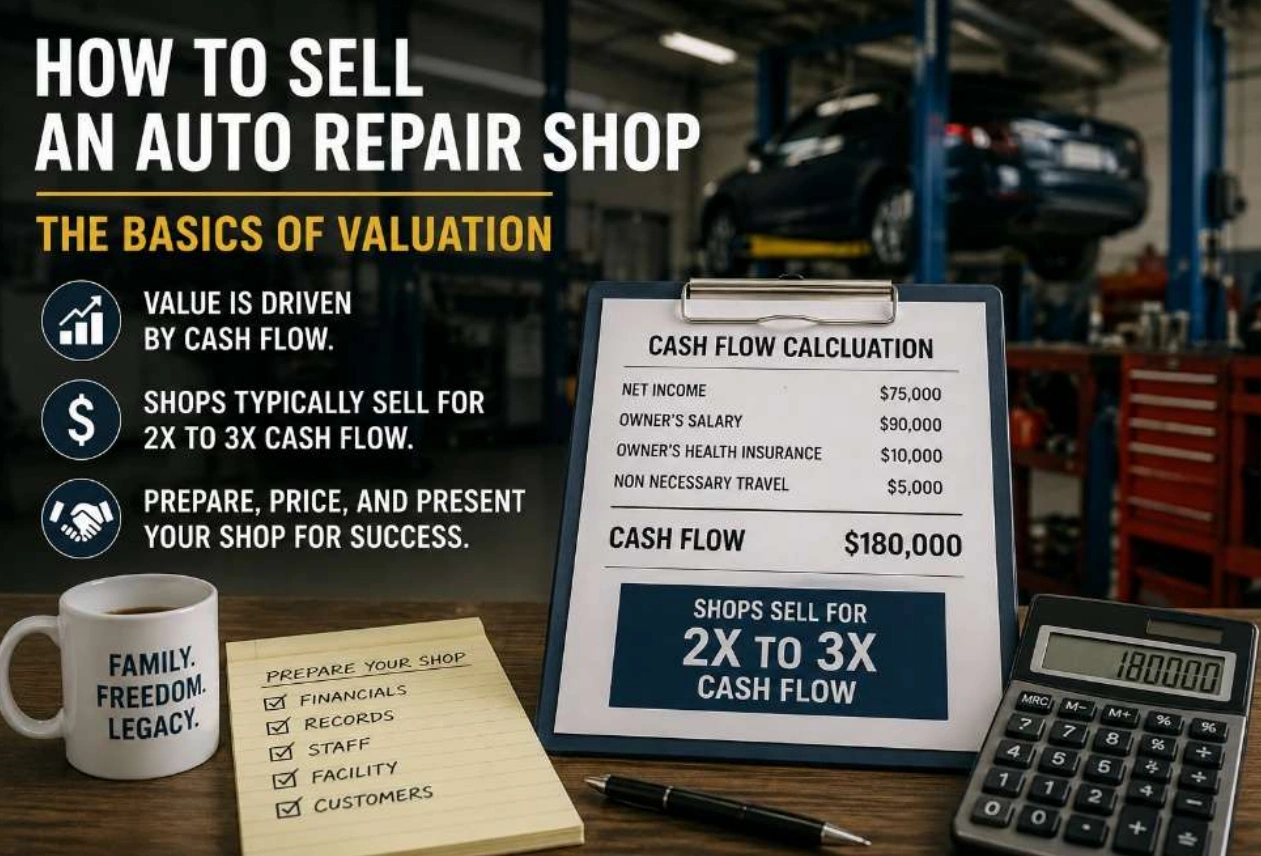
RPM Shop Sales specializes in the sale of automotive repair businesses and the commercial real estate associated with those businesses. Auto repair deals require an understanding of how a shop operates, auto repair equipment, technicians, customer mix, financial performance, environmental considerations, financing, and contracts. That’s why specialization matters so much. You really get to know how all these factors come together to make the deal work.
Business brokerage isn’t for every real estate professional. It’s a hard gig. But for someone exploring business broker jobs who is good with numbers and good with people, it can work out nicely. That’s really what it takes. Be good with numbers. And be good with people.
It could be a really good fit for an experienced real estate agent who wants to move beyond traditional residential or commercial real estate without abandoning the skills and professional experience already developed. For the right person, becoming a business broker isn’t starting over. It’s taking the skills you already have and making them work in a different kind of transaction.
RPM Shop Sales is expanding and is interested in talking with real estate professionals who want to develop a business brokerage practice specializing in the automotive repair industry. Prior business brokerage experience is good, and it does help, but it’s not mandatory. If you’re good with numbers, and you’re good with people, and if you’re intrigued by the idea of becoming a business broker, give us a call. It’s a cool job.